You've heard your powder-obsessed friends throw around "Japow" like it's some kind of magic password. They say it with that faraway look in their eyes, the one that says they've experienced something that ruined every other ski trip forever. And honestly? They're not wrong.
Japow, Japan plus powder, isn't marketing hype. It's meteorology. Cold Siberian air masses collide with warm Sea of Japan moisture to create the driest, lightest, most rideable snow on the planet. We're talking 4-8% moisture content compared to 7-12% everywhere else. That difference sounds small until you're floating chest-deep through trees at 9am on a Tuesday, wondering why you ever skied anywhere else.
This guide breaks down what makes Japow different, where to find the best of it, and, because we believe in honest advice, when it might not be right for you.
THE SCIENCE: WHY JAPAN'S SNOW IS DIFFERENT
THE SIBERIAN EXPRESS
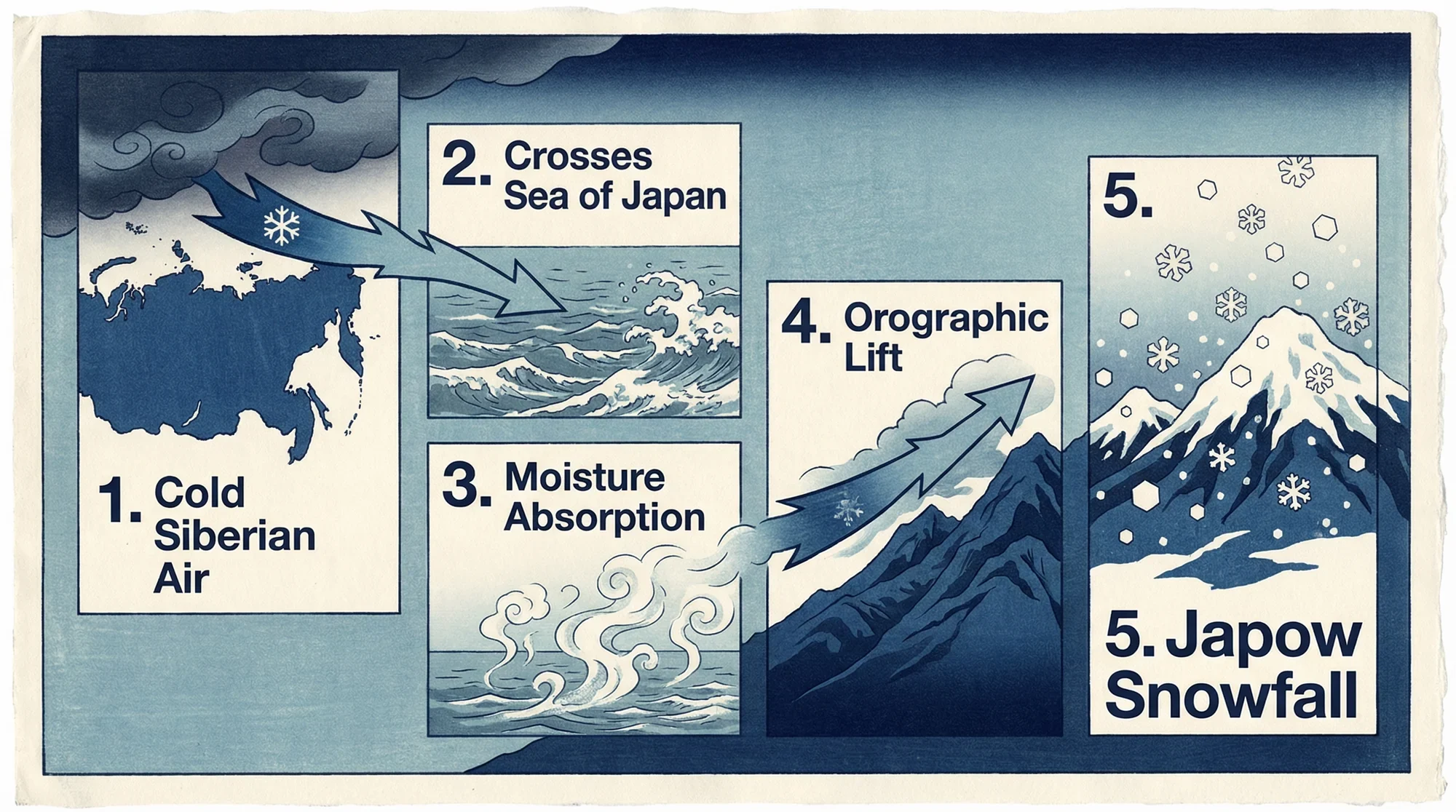
Japow happens when three forces collide:
- Cold air masses form over Siberia at temperatures hitting -30°C
- Winds push east across the Sea of Japan, which stays relatively warm even in winter
- Moisture evaporates from the sea surface and saturates the cold air
- Mountains force the air upward, causing rapid cooling
- Snow crystals form and fall as extremely dry, fine powder
The magic happens in that final step. Temperatures stay consistently cold (-5°C to -15°C), so the crystals stay small and delicate. They don't clump together or absorb extra moisture. The result? Powder so light you can blow it off your glove like dust. This phenomenon, known as orographic precipitation, is the same process that creates Utah's famous snow, just with colder, drier air.
THE NUMBERS THAT MATTER
Most ski content glosses over the science. We won't.
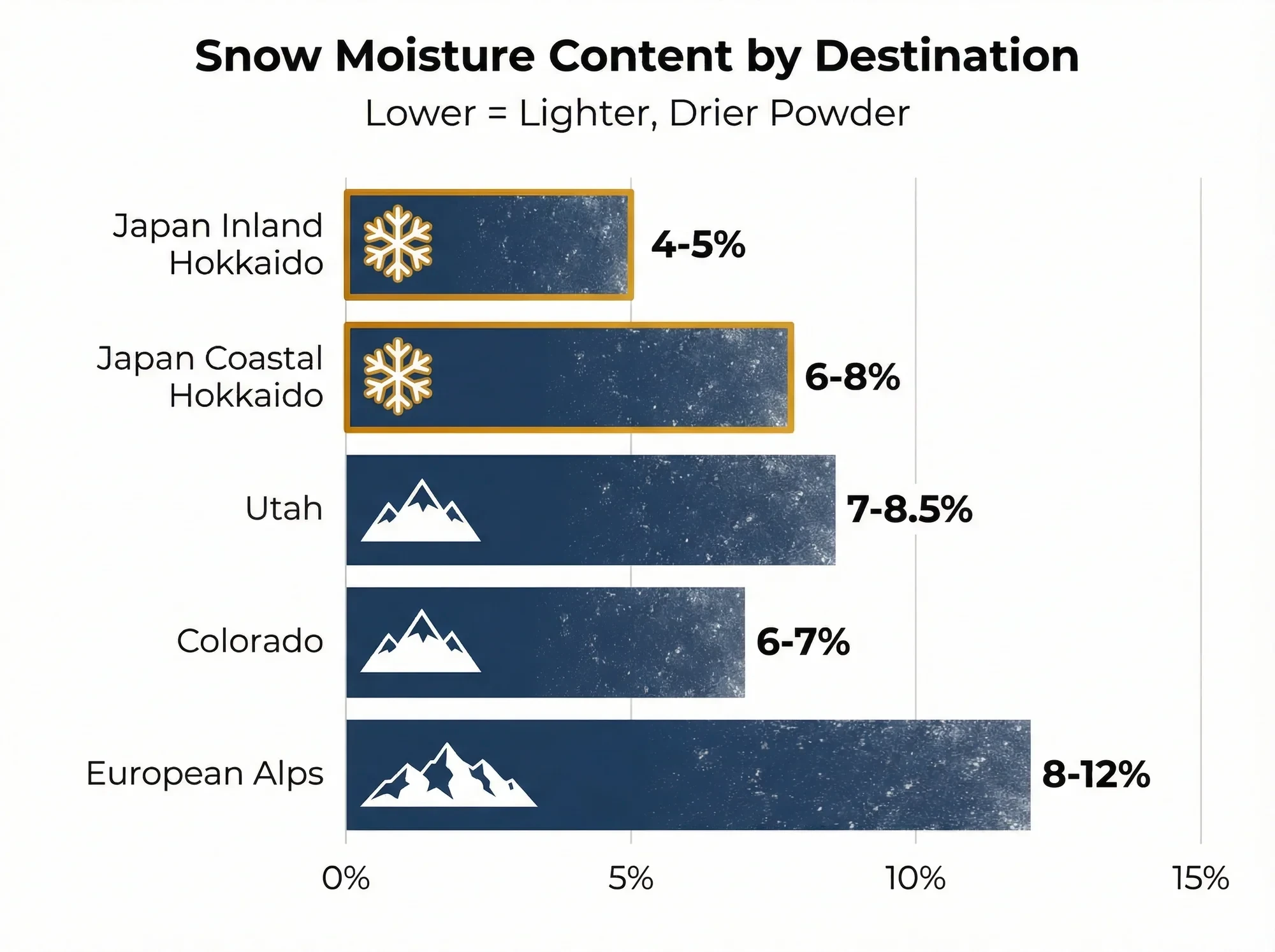
| Destination | Moisture Content | Annual Snowfall | Reality Check |
|---|---|---|---|
| Japan (Inland Hokkaido) | 4-5% | 15-18m | World's driest rideable powder |
| Japan (Coastal Hokkaido) | 6-8% | 14-16m | Still exceptional, more accessible |
| Utah "Greatest Snow on Earth" | 7-8.5% | 12-14m | Marketing is strong, snow is good |
| Colorado | 6-7% | 8-12m | Drier than Utah, less total volume |
| European Alps | 8-12%+ | 6-10m | Generally wetter, heavier snow |
The difference between 4% and 8% moisture sounds academic. In practice, it's the difference between floating and swimming. Low-moisture powder offers almost zero resistance, you plane on top rather than pushing through.
THE PRESERVATION FACTOR
Here's what most people miss: Japow stays good longer because Japan stays cold.
When temperatures hover between -5°C and -15°C for weeks, fresh snow doesn't melt, refreeze, or form crusts. That powder you're eyeing on day three? Still soft. Compare that to warmer destinations where afternoon sun creates ice layers, and you understand why Japan's consistency matters as much as the snowfall itself.
WHERE TO FIND JAPOW: A REGIONAL BREAKDOWN
Not all Japow is equal. Region choice shapes your entire experience.
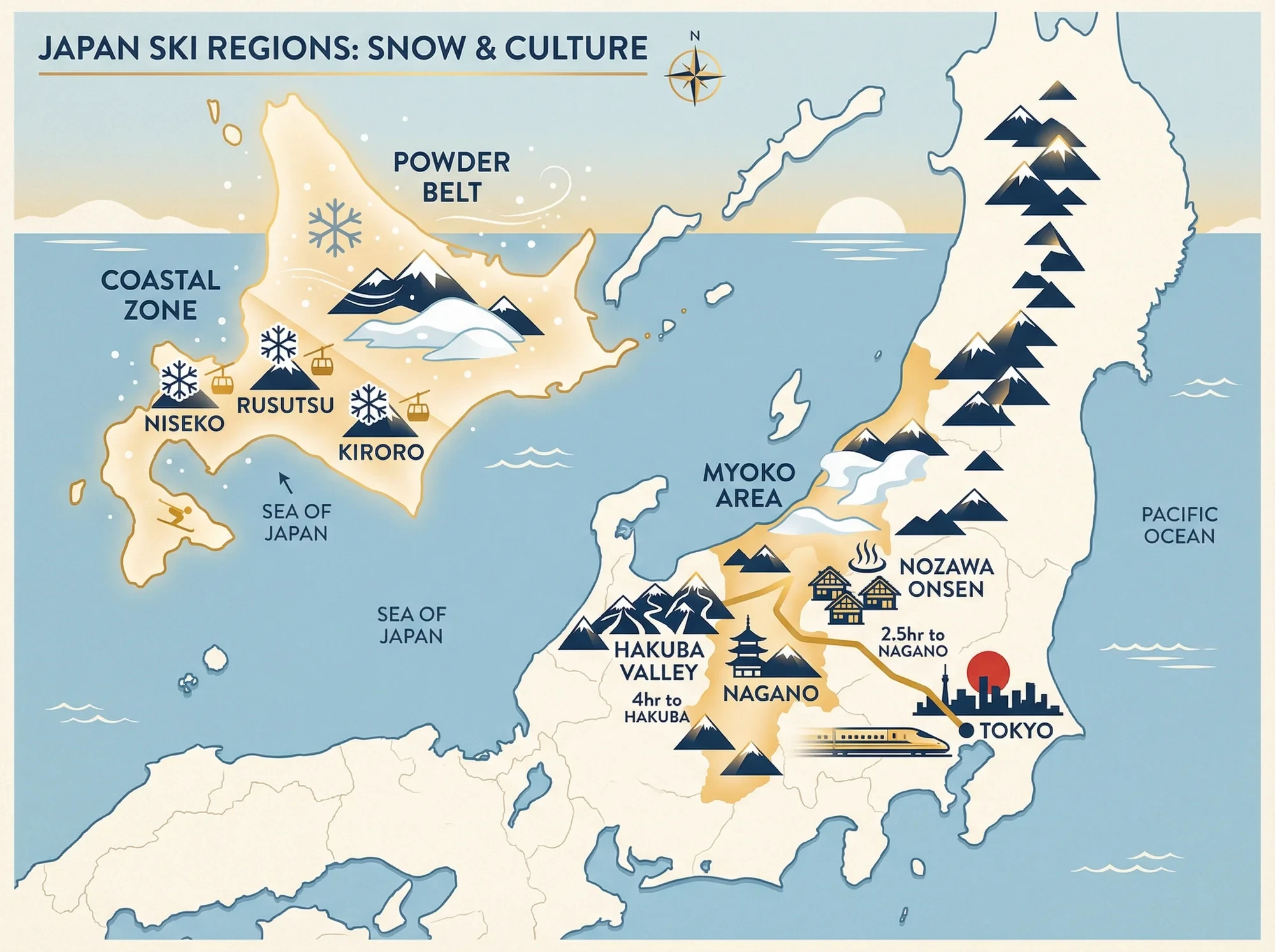
THE POWDER BELT (INLAND HOKKAIDO)
The driest snow on earth. Period.
The Powder Belt refers to inland Hokkaido resorts: Furano, Asahidake, Kurodake, Kamui, and Tomamu. These mountains sit far enough from the coast that the heavier, wetter snow falls before reaching them. What's left is pure, 4-5% moisture champagne powder.
Resorts worth knowing:
- Furano: Consistent conditions, legitimate terrain, fewer crowds than coastal resorts
- Asahidake: Lift-accessed backcountry, serious terrain, minimal grooming, this is for people who know what they're doing
- Kamui Links: Tree skiing paradise, local knowledge required, zero hand-holding
The trade-off: Less English support, harder to reach, fewer amenities. This is for experienced powder hunters who don't need anyone explaining how to find the goods.
COASTAL HOKKAIDO (NISEKO, RUSUTSU, KIRORO)
Where most people get their first taste of Japow.
Niseko is the gateway drug. Coastal Hokkaido receives 14-18 meters of annual snowfall with moisture content around 6-8%. Still lighter than anywhere in North America or Europe.
Resorts worth knowing:
- Niseko United: Four interconnected resorts, English everywhere, legendary tree skiing, and yes, the crowds to match
- Rusutsu: Three mountains, fewer crowds, where Hokkaido locals go when Niseko's Instagram scene gets too much
- Kiroro: Deep snow, steep terrain, quiet weekdays
The trade-off: Niseko especially draws crowds and commands premium prices. January weekends can feel like a theme park. If that's not your vibe, Rusutsu or Kiroro offer similar snow with more solitude and way fewer selfie sticks.
HONSHU (HAKUBA, NAGANO, NIIGATA)
Japow closer to Tokyo.
Japan's main island receives 8-12 meters of annual snowfall with slightly higher moisture content (7-10%). The powder is heavier than Hokkaido but still exceptional by global standards. The real advantage? You can reach Hakuba Valley from Tokyo in under four hours.
Resorts worth knowing:
- Hakuba Valley: 10 interconnected resorts, Olympic heritage, terrain for literally everyone
- Nozawa Onsen: A 1,000-year-old onsen village that happens to have 36 runs and legitimate steeps, soak in 300-year-old bathhouses after skiing
- Lotte Arai: 18 meters of snowfall, 84% ungroomed terrain, freeride paradise
- Myoko Kogen: Deep snow, uncrowded, authentic Japanese atmosphere
The trade-off: Warmer temperatures mean the powder can get heavy by afternoon, especially in March. Ski early, soak late.
WHEN TO GO: THE JAPOW CALENDAR
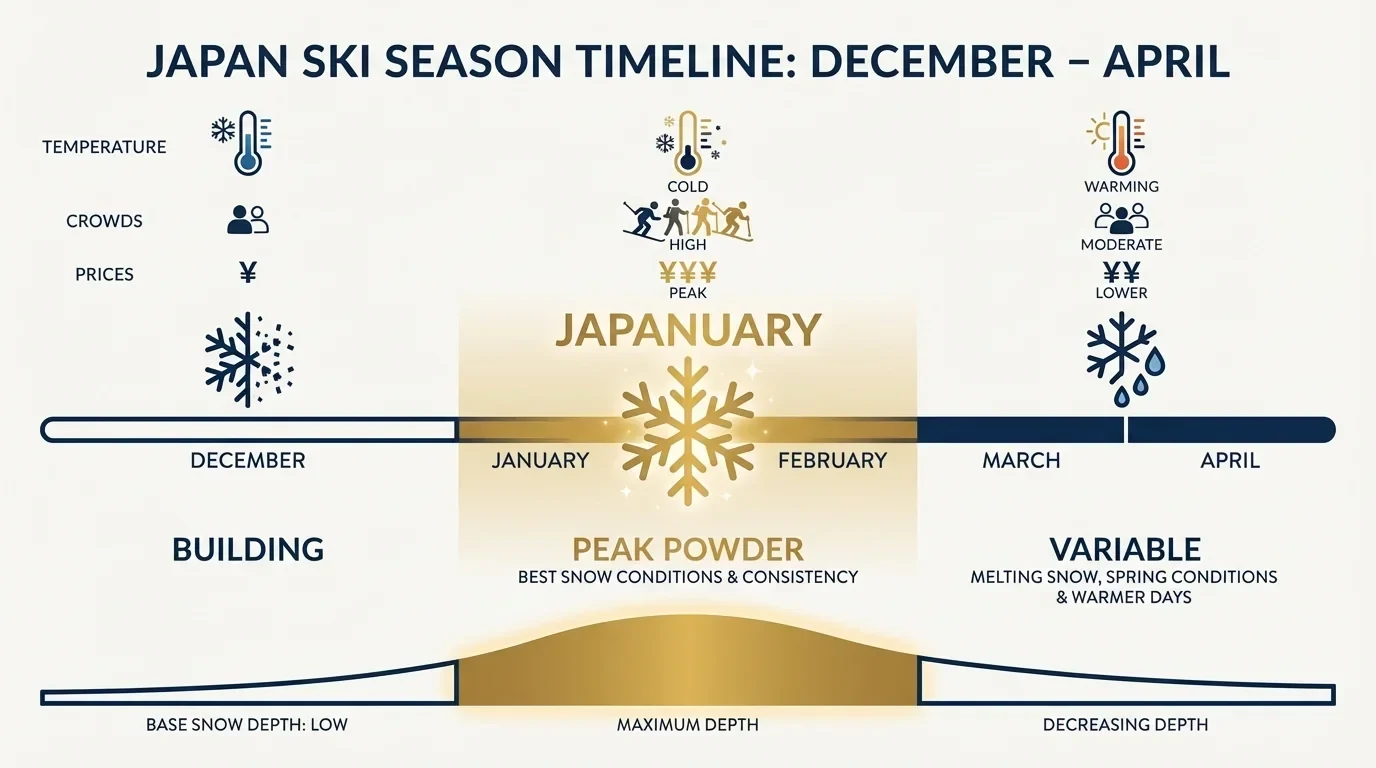
PEAK SEASON: JANUARY-FEBRUARY ("JAPANUARY")
The ski community coined "Japanuary" for a reason. According to Japan Meteorological Agency data, mid-January through late February delivers:
- Consistent cold temperatures preserving powder quality
- Frequent storm cycles dumping fresh snow every 2-3 days
- Deep base (300-500cm) with minimal rain or melt
- Reliable conditions at all elevation levels
If your goal is guaranteed Japow, book January or February. Yes, it's crowded. Yes, it's expensive. But the snow makes it worth it. We'd target late January for the sweet spot of deep base, consistent storms, and slightly fewer crowds than February school holidays.
DECEMBER: THE BUILD-UP
Early season brings snowfall but less consistent quality. Base depths are still developing, and lower elevations may see rain during warm spells. December works if you're flexible and experienced enough to adjust when conditions shift.
MARCH-APRIL: THE TRADE-OFF
Spring skiing offers fewer crowds and lower prices. Longer days mean more skiing hours. But the powder changes. Expect heavier snow, afternoon slush at lower elevations, and more variable conditions.
March is still good skiing, just not the ultra-light Japow of January.
HOW JAPOW ACTUALLY FEELS
Japow is different from different.
THE PHYSICS OF FLOATING
Low-density snow (4-8% moisture) creates almost no resistance against your skis or board. Instead of pushing through powder like water, you plane on top like a surfboard. The sensation is weightless, effortless, addictive.
Skiers describe it as:
- "Floating on clouds"
- "Skiing through smoke"
- "The snow just... disappears under you"
It sounds like marketing hyperbole until you experience it. Then you understand why people fly 11,000 miles for a week of this.
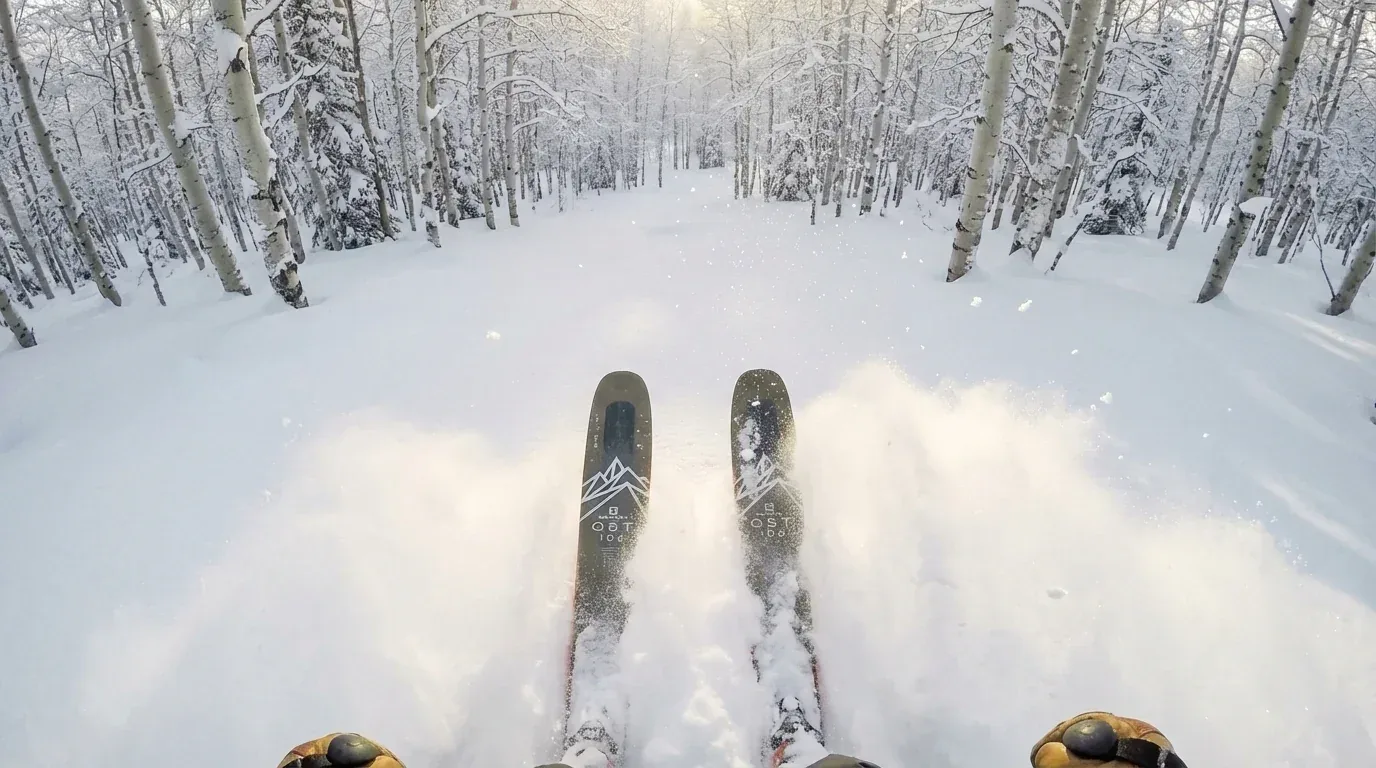
GEAR THAT MAKES A DIFFERENCE
Japow rewards proper equipment:
- Fat skis (100mm+ underfoot): More surface area = more float
- Rockered tips: Rise over the powder instead of diving under
- Setback stance on snowboards: Keep your nose up in deep snow
- Powder-specific boards: Longer, directional shapes for maximum float
Many resorts rent powder-specific gear. If you're flying in with your everyday setup, demo something wider for at least one deep day. The difference is transformational. Powder Magazine's gear guides offer solid recommendations for fat skis if you're in the market.
IS JAPOW RIGHT FOR YOU?
We believe in honest advice. Japow isn't the right trip for everyone.
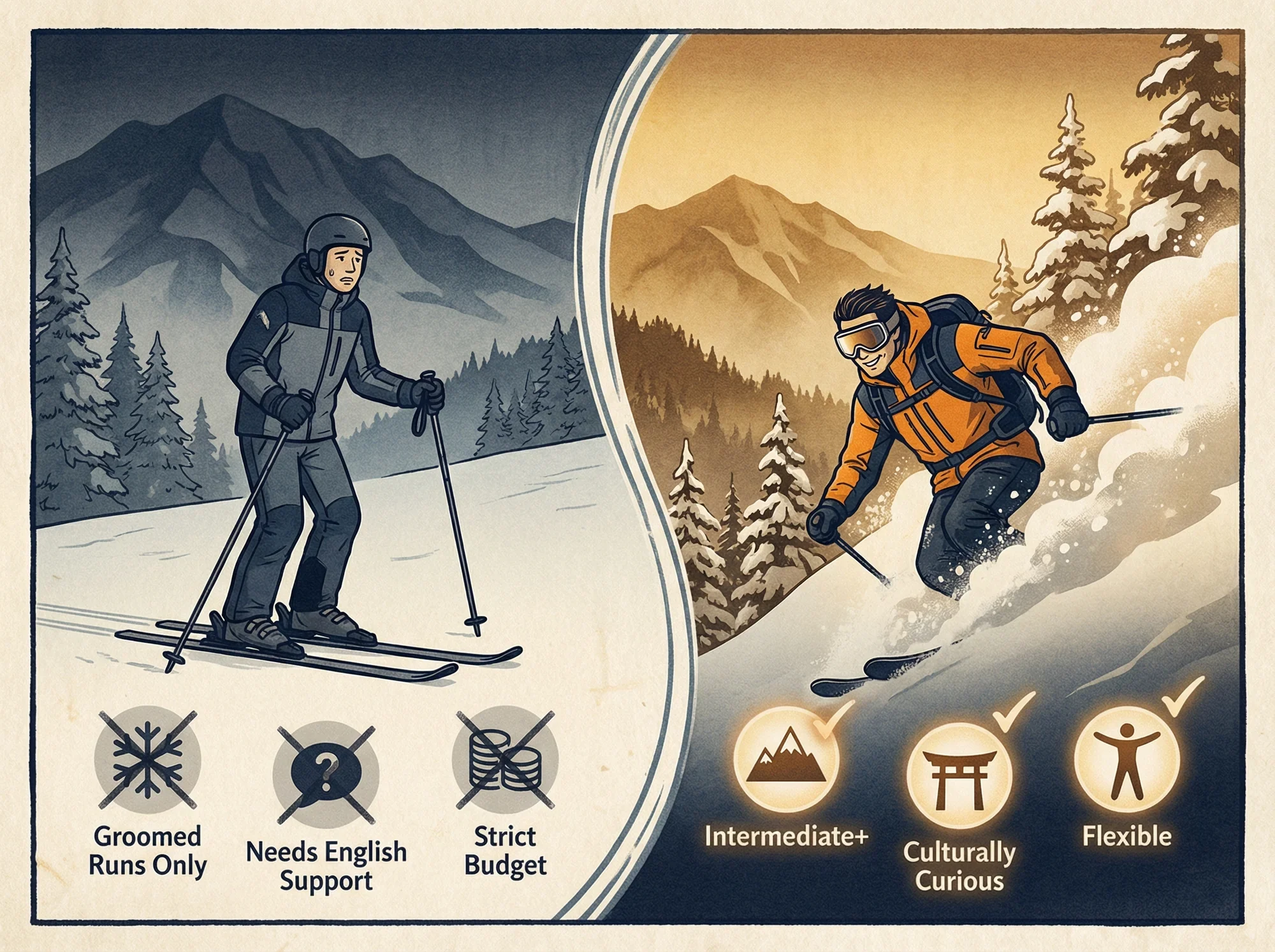
SKIP THIS TRIP IF:
You only ski groomed runs. Japow's appeal is off-piste. If you prefer corduroy, you're paying premium prices for terrain you won't use.
Low visibility frustrates you. Storm days in Japan mean fog, flat light, and limited visibility. The powder is incredible, but you might be skiing blind.
You're a complete beginner. Powder skiing requires different technique than groomed slopes. Get comfortable on regular terrain first.
Your Japanese is limited to pointing at menus and you panic easily. Outside of Niseko and central Hakuba, English support is limited. That's part of the charm, but it can be challenging if you're not comfortable with uncertainty.
You're on a strict budget. Niseko costs as much as European luxury resorts. Budget options exist, but Japow isn't a cheap trip overall.
THIS TRIP IS FOR YOU IF:
You're intermediate+ and ready to level up. Japow is the perfect place to learn powder technique because the snow is so forgiving. It's like training wheels for deep snow.
You've done Utah, Colorado, and the Alps. Japan is the final boss. Once you've skied Japow, everywhere else feels a little... wet.
You embrace uncertainty. Weather changes, lifts close, plans shift. Flexibility is rewarded. Rigidity is punished.
You value culture alongside sport. The onsen, the food, the hospitality, they're as much a reason to visit as the snow. Maybe more.
BEYOND THE SLOPES: THE FULL EXPERIENCE
Japow isn't just about skiing. It's about the complete Japanese winter experience.
ONSEN CULTURE
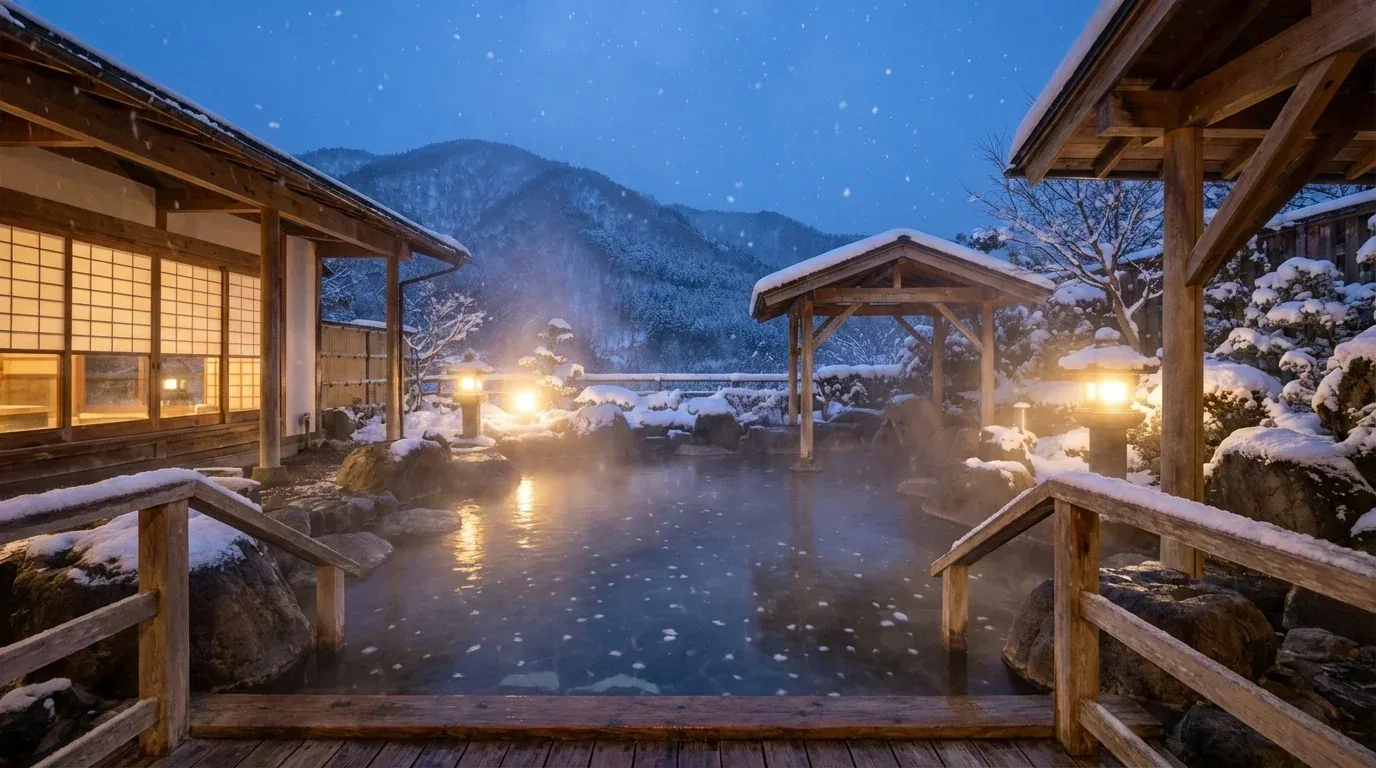
After a day of powder, nothing beats soaking in a natural hot spring. Most ski towns have multiple onsen options, from resort spas to centuries-old public bathhouses.
The post-ski routine in Japan: strip off your gear, shuffle down steaming cobblestone streets in provided slippers, sink into 42°C water while snow falls on your head. It's the reset button you didn't know you needed.
Concerned about tattoos? Many Japanese onsen have strict no-tattoo policies, but attitudes are changing. TattooFriendlyOnsen.com is the definitive resource for finding welcoming facilities across Japan. We also track tattoo-friendly facilities at ski resorts specifically, so you can find options before you book.
THE FOOD
Forget overpriced mountain lodge burgers. Japan's ski town dining is genuinely excellent:
Hokkaido is famous for:
- Fresh seafood, crab, uni, salmon sashimi
- Soup curry, a Sapporo specialty that's perfect après-ski
- Rich, warming ramen that ruins you for instant noodles forever
Nagano is known for:
- Soba noodles made with local buckwheat
- Oyaki, stuffed dumplings
- Shinshu beef, comparable to Wagyu at half the price
JAPANESE HOSPITALITY
The service culture in Japan elevates everything. Ski rentals are efficient and precise; your gear is ready before you've finished paperwork. Restaurants serve ramen that ruins you for anywhere else. Hotels anticipate needs you didn't know you had.
The après-ski scene differs from European party culture. It's quieter, more focused on food and relaxation than nightclubs. If you want rowdy après, Niseko's Hirafu village has options. Everywhere else, embrace the mellow vibe.
IS JAPOW WORTH THE HYPE?
Yes. With caveats.
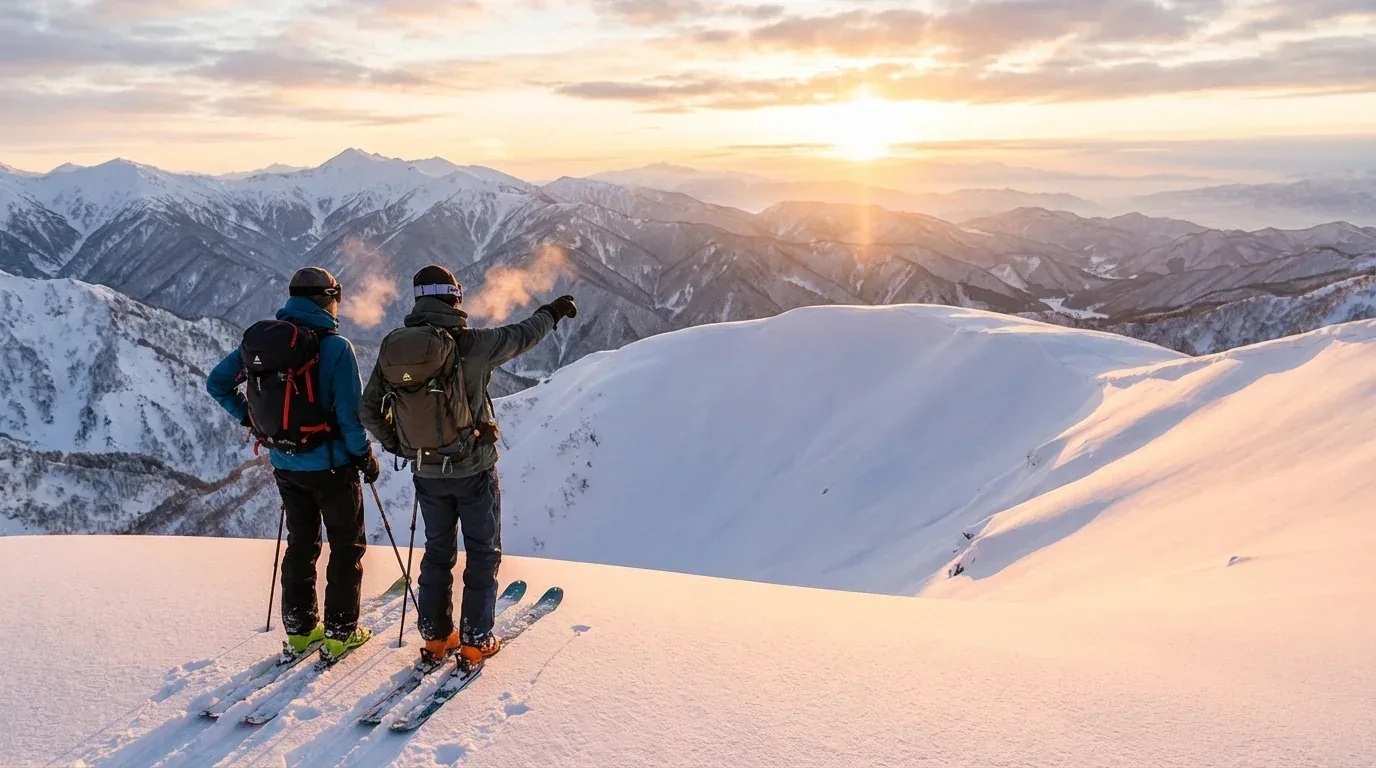
Japan offers the best powder skiing on earth, that's not marketing, it's measurable. The 4-8% moisture content, the consistent cold, the storm frequency, the annual snowfall volumes. No other destination matches the combination.
But Japow isn't magic that works for everyone. It rewards:
- Powder skills (or willingness to learn them)
- Cultural curiosity
- Flexibility with weather and plans
- Budget for a premium experience
If that sounds like you, start planning. The powder isn't getting any lighter.
Ready to find your Japow resort? Explore Japan's ski resorts and filter by region, terrain type, and the features that matter to you. We've done the legwork on 75+ resorts across Hokkaido, Nagano, and beyond, with honest "Best For" and "Skip If" recommendations on every page.
Consider us the friend who's been six times and finally wrote it all down. Your Japow adventure is waiting.